Render Token, a decentralized GPU rendering network, is facing increased scrutiny as its market capitalization reaches $948.23 million, with a recent 11.8% price drop and $54.11 million in 24-hour trading volume as of October 19, 2026 (UTC). This pullback highlights potential liquidity risks and underscores the competitive landscape in blockchain rendering solutions, with Akash Network and Golem emerging as key rivals.
The Render Network, built on the Solana blockchain, connects artists and developers needing rendering power with node operators who lease out idle GPUs. The RENDER token facilitates payments for rendering jobs and rewards node operators. This model aims to offer a more cost-effective and fault-tolerant alternative to centralized services like AWS Thinkbox Deadline or Google Cloud Rendering by distributing workloads across numerous independent GPUs.
Render Token’s core technology integrates with OctaneRender, a widely used GPU-accelerated path-tracing engine in the film and visualization industries. The protocol, which launched on Ethereum in 2020 and migrated to Solana in late 2023, reduced transaction fees significantly and increased processing speeds. This migration was crucial for handling parallel rendering tasks and supporting real-time applications requiring rapid task assignments.
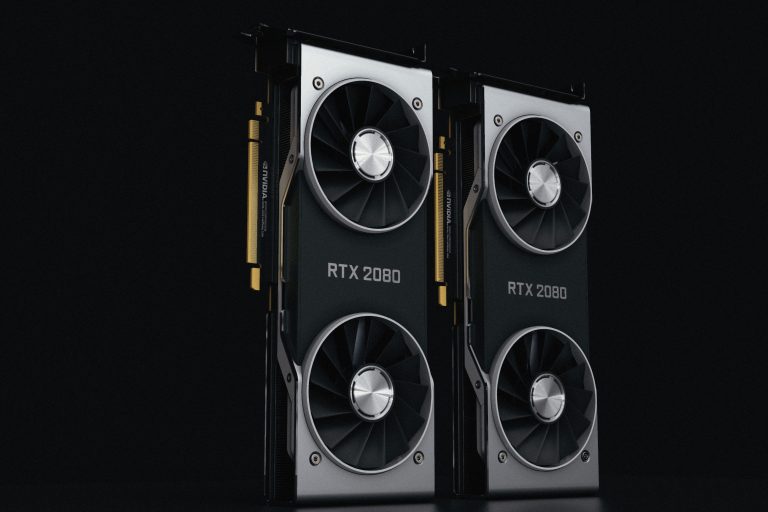
Despite its market leadership, Render Token faces competition from Akash Network and Golem. Akash Network operates as a general-purpose cloud computing marketplace, allowing users to deploy any containerized application, including rendering workloads, on spare server capacity. While Akash offers flexibility in setting up custom environments, it requires users to manage software configuration and output quality verification themselves, lacking Render Token’s built-in quality assurance.
Golem, one of the earliest decentralized compute networks, initially focused on CPU tasks and later expanded to GPU workloads. Its architecture supports task execution via Python or Ray, with a reputation system for node reliability. However, Golem’s rendering support is less mature, requiring users to package rendering software into task definitions, a process that demands technical expertise and may not be suitable for all artists.
Neither Akash Network nor Golem publishes rendering-specific benchmarks, such as frames per second or average job completion times. This absence of verified data makes direct performance comparisons with Render Token challenging, forcing potential users to conduct their own side-by-side tests to evaluate cost, speed, and reliability based on their specific use cases.

The performance of any decentralized rendering network hinges on the hardware specifications of its active nodes, the efficiency of its task-distribution algorithms, and current network load, rather than token price or trading volume. Render Token’s network features high-end GPUs like NVIDIA RTX 3090s and 4090s, but job assignment to specific GPU tiers is not guaranteed unless specified during submission. Users may encounter longer rendering times if higher-tier GPUs are occupied.
Akash Network’s provider nodes vary from home servers to data-center racks, but hardware standards are not enforced, requiring users to specify and verify GPU models. Golem’s nodes are also heterogeneous, and while its reputation system tracks task completion, it does not measure rendering quality, potentially leading to charged compute time for visually flawed outputs.
While user feedback for Render Token is generally positive among independent artists, variability in job completion times and occasional false positives in quality assurance have been reported. The lack of transparent metrics across all three networks, including total active nodes or aggregate GPU capacity, contributes to enterprise studios’ slow adoption of decentralized rendering at scale. Investors are advised to monitor RENDER’s ability to hold the $1.70 support level, as a break below it could signal market doubt regarding the network’s capacity to attract major CGI studios or real-time rendering clients.
For traders seeking exposure to the decentralized compute thesis without operating rendering nodes, platforms like OneBullEx offer spot trading for RENDER. This allows for trading based on network adoption trends and market sentiment, separate from the operational demands of running GPU infrastructure.